Stops That Produce Most Often (SC + NC)
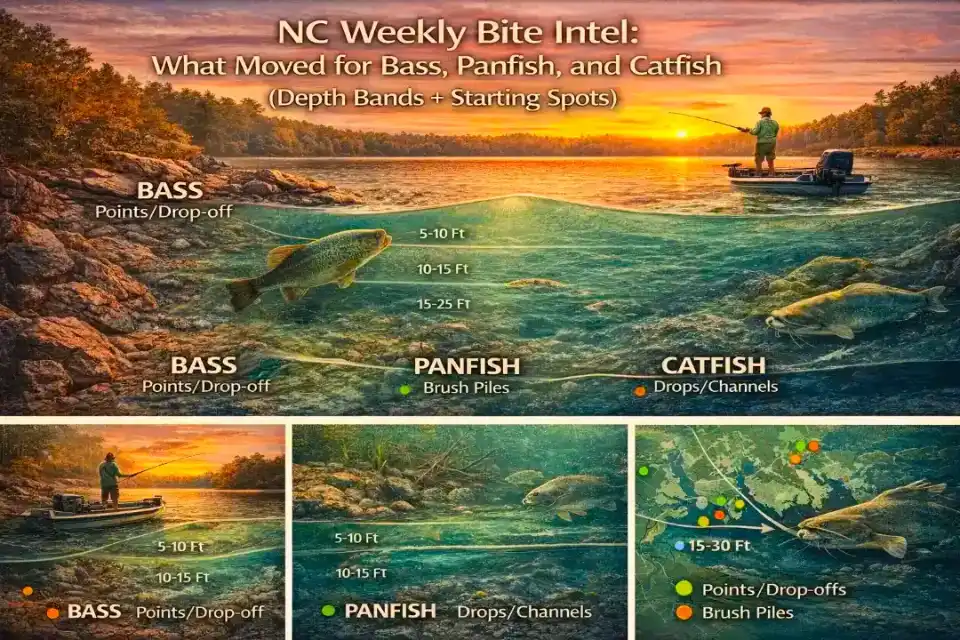
When you only have 90 minutes to fish from the bank, success comes from starting right, not covering ground. Across South Carolina and North Carolina this week, bank anglers who caught fish consistently hit the same three stop types first — places that put depth, cover, and movement within easy casting range. Anglers who wandered shoreline hoping to “run into” fish usually ran out of time instead.
This report is built specifically for short, bank-only trips. The goal is simple: three stops, fished with intention, that give you the highest odds of bites without guesswork.
What you’ll learn in this article:
- The three bank stops that produced most consistently
- Why these spots work across lakes and rivers
- How long to fish each stop before moving
- What to throw first at each location
- How to adjust if the first stop is slow
1. Stop #1: Riprap or Rock With Nearby Depth
Rocky banks and riprap were the most reliable first stop across both SC and NC this week. Rock holds heat, attracts bait, and usually borders deeper water that fish can slide to and from throughout the day. From the bank, this gives you multiple depth options without relocating.
Use this table to fish rock efficiently on a short trip.
Table: Stop #1 — Rock / Riprap Playbook
| Species | Where fish held | Best depth range | First bait to throw | How long to fish |
|---|---|---|---|---|
| Bass | First drop off rock | 4–10 ft | Jig | 25–30 minutes |
| Panfish | Smaller rock edges | 6–10 ft | Small jig | 20 minutes |
| Catfish | Rock near channels | 8–15 ft | Cut bait | 30 minutes |
| Windy days | Windward rock | 3–8 ft | Spinnerbait | Until bites stop |
| Calm clear | Deeper rock | 8–12 ft | Finesse rig | Slow, methodical |
Rock was forgiving — you could adjust depth, speed, and angle without changing stops, which is critical when time is limited.
Tip: If you’re torn on where to begin your 90 minutes, start on rock that lets you reach deeper water within one cast.
2. Stop #2: Steep Bank or First Major Drop
Steep banks and sharp drops were the second-best stop because they kept fish close even when activity slowed. Bass, panfish, and catfish all used these areas as holding zones, sliding up briefly to feed and settling back down when conditions tightened.
This table shows how to fish steep banks efficiently from shore.
Table: Stop #2 — Steep Bank / First Drop Playbook
| Species | Fish position | Target depth | Best presentation | When to move on |
|---|---|---|---|---|
| Bass | Just off the break | 6–12 ft | Shaky head | No bite in 20 min |
| Panfish | Near cover edges | 6–10 ft | Vertical jig | No grouped bites |
| Catfish | Base of drop | 10–18 ft | Cut bait | No activity window |
| Clear water | Deeper edge | 8–15 ft | Jerkbait | Fish spook |
| Windy | Higher on break | 4–8 ft | Spinnerbait | Wind dies |
Fishing parallel to the bank instead of straight out kept baits in the strike zone longer and produced more bites in less time.
Tip: If you’re torn on casting angles, cast parallel first — it keeps your lure in productive depth longer.
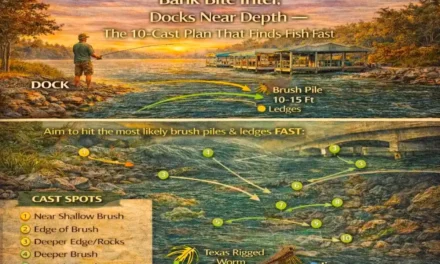
3. Stop #3: Docks or Current Breaks Near Shore
The third stop depended on the water you were fishing, but the rule stayed the same: fish where movement meets shelter. On lakes, that meant docks near depth; on rivers, it meant current breaks like eddies and outside bends.
Use this table to pick the right third stop quickly.
Table: Stop #3 — Docks (Lakes) or Current Breaks (Rivers)
| Water type | Best bank feature | Why it worked | Best bait | Time limit |
|---|---|---|---|---|
| Lake | Dock near drop | Shade + depth | Jig | 20 minutes |
| Lake (clear) | Floating dock | Consistent shade | Finesse worm | Short passes |
| River | Outside bend | Slack water | Jig | Multiple angles |
| River (flowing) | Eddy | Food delivery | Small crank | Repeated casts |
| Windy | Windward side | Activity boost | Spinnerbait | While active |
This final stop often produced late-session bites, especially when fish had repositioned after earlier pressure.
Tip: If you’re torn between docks and open bank, choose the feature that offers shade or current relief.
4. How to Allocate Your 90 Minutes
Time management mattered as much as location. Anglers who stuck to a simple time plan avoided spending too long in unproductive water.
Use this table to structure your short trip.
Table: 90-Minute Bank Plan
| Time block | Where to fish | Goal |
|---|---|---|
| Minutes 0–30 | Rock / riprap | Find first bite |
| Minutes 30–60 | Steep bank / drop | Build consistency |
| Minutes 60–90 | Docks or current breaks | Capitalize late |
This structure kept anglers moving with intention instead of wandering.
Tip: If you’re torn about leaving a stop, leave on schedule — discipline beats hope on short trips.
5. The Fast Reset When One Stop Fails
Sometimes a stop didn’t produce at all. When that happened, successful anglers didn’t panic — they made one small adjustment before moving on.
Use this reset checklist to salvage a stop quickly.
Table: Quick Stop Reset Checklist
| Problem | Likely cause | Best reset |
|---|---|---|
| No bites early | Fish deeper | Move down the break |
| Missed strikes | Hesitant fish | Downsize bait |
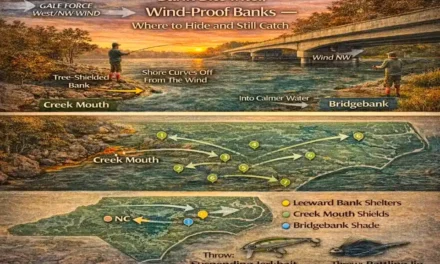
| Wind picked up | Poor control | Heavier weight |
| Calm clear lull | Spooked fish | Slow way down |
| One random bite | Group nearby | Repeat casts |
These small tweaks often turned a dead stop into a productive one without burning extra time.
Tip: If you’re torn between abandoning a stop or adjusting, make one adjustment first — then move if it doesn’t respond.
How to Use This Info on Your Next Trip
For bank anglers with limited time in SC and NC, success this week came from starting smarter, not fishing longer. Rock, steep banks, and docks or current breaks consistently put fish within casting range.
Hit three proven stops, manage your time, and adjust before you move. That 90-minute plan produced more fish than wandering shoreline ever will.
Your Next 3 Moves
- Start here: Start on riprap/rock that has nearby depth and fish the edge first before you ever “walk the bank” randomly.
- Adjust like this: If bites are slow, slide one step deeper and fish parallel (not straight out) so your bait stays in the strike zone longer.
- Move if needed: Run the route—go from rock to a steep bank/first drop, then finish on docks near depth (lakes) or current breaks (rivers) to capitalize late.