Where to Hide and Still Catch
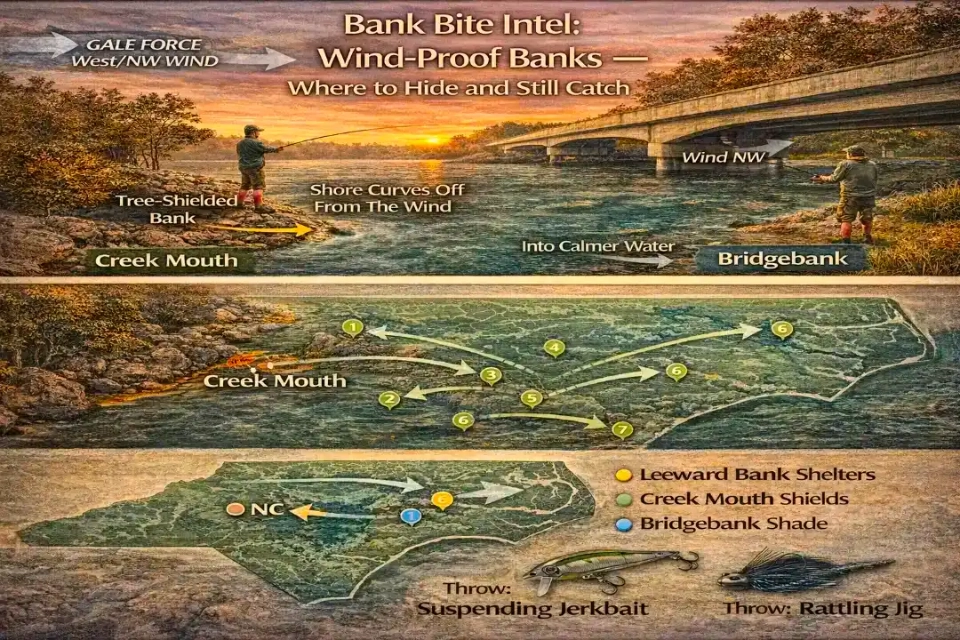
Wind shut down a lot of shoreline this week across South Carolina and North Carolina — but not all of it. Bank anglers who struggled usually stayed exposed and fought line control, while anglers who hid from the wind on purpose quietly caught fish from the same lakes and rivers. Bass, panfish, and catfish didn’t disappear; they repositioned to places where wind helped them feed or where it stopped bothering them entirely.
This report is built for bank anglers dealing with windy days. It shows where to hide, when to embrace the wind instead of fighting it, and how to fish effectively when conditions aren’t friendly.
What you’ll learn in this article:
- Which bank features stay productive in wind
- When wind helps bank fishing instead of hurts it
- Where bass, panfish, and catfish reposition on windy days
- How to maintain control from shore
- A fast reset when wind ruins your first plan
1. Leeward Banks: The First Place to Check
Leeward banks — the side protected from direct wind — were the most reliable “hideouts” this week. These areas offered calmer water, better line control, and fish holding tighter to cover instead of scattering. For bank anglers, this meant more controlled presentations and fewer wasted casts.
Use this table to fish leeward banks efficiently.
Table: Leeward Bank Playbook
| Species | Where fish held | Productive depth | Best bait | Why it worked |
|---|---|---|---|---|
| Bass | Tight to cover | 6–12 ft | Jig | Stable positioning |
| Panfish | Near brush | 6–10 ft | Small jig | Reduced drift |
| Catfish | Bottom edges | 10–18 ft | Cut bait | Consistent scent trail |
| Clear water | Deeper edge | 8–15 ft | Finesse worm | Less disturbance |
| All species | Shade lines | Variable | Slow rigs | Better control |
Leeward banks weren’t flashy, but they produced steady bites when exposed shoreline was unfishable.
Tip: If you’re torn about which side of the lake to fish, start on the side where your line isn’t bowing in the wind.
2. Windward Banks: Only Fish Them With a Reason
Windward banks weren’t automatic skips — they just required the right conditions. When wind pushed bait and stained water into a bank, fish followed, especially bass. When wind only created chop without food, these banks were mostly empty and frustrating.
This table shows when windward banks were worth the effort.
Table: Windward Bank Decision Guide
| Condition | Fish response | Best target | Best bait | When to leave |
|---|---|---|---|---|
| Wind + stain | Active fish | Rock banks | Spinnerbait | Wind dies |
| Wind + bait | Grouped feeders | Points | Chatterbait | No strikes |
| Clear water | Spooky fish | Skip | — | Immediately |
| Cold wind | Tight holding | Skip | — | Always |
| Moderate breeze | Mixed response | Corners | Jig | No bites in 15 min |
Windward banks were either very good or completely empty — there wasn’t much middle ground.
Tip: If you’re torn on fishing the windward side, only do it when wind brings bait or stain with it.
3. Cove Mouths and Inside Corners: Natural Wind Breaks
Cove mouths, inside bends, and shoreline corners quietly produced some of the best bank bites on windy days. These spots reduced wind impact while still benefiting from nearby movement and food delivery.
Use this table to identify natural wind breaks from shore.
Table: Natural Wind Break Bank Spots
| Bank feature | Why it holds fish | Depth range | Best presentation |
|---|---|---|---|
| Cove mouth | Wind funnel | 5–10 ft | Jig |
| Inside corner | Calm pocket | 4–8 ft | Finesse worm |
| Marina edges | Blocked wind | 6–12 ft | Small swimbait |
| Bridge approaches | Deflected flow | 5–10 ft | Spinnerbait |
| Point lee side | Reduced chop | 6–15 ft | Bottom contact |
These spots let anglers fish confidently instead of fighting conditions.
Tip: If you’re torn about where to stand, choose the spot where waves stop breaking.
4. Species-Specific Wind Adjustments From the Bank
Each species reacted differently to wind this week. Bass often used wind to feed, panfish avoided it, and catfish didn’t mind it as long as scent stayed put.
This table helps fine-tune your approach by species.
Table: Wind Adjustments by Species
| Species | Wind reaction | Best bank position | Best adjustment |
|---|---|---|---|
| Bass | Uses wind | Windward or edges | Moving baits |
| Panfish | Avoids wind | Leeward pockets | Slow jigs |
| Catfish | Neutral | Protected edges | Let bait soak |
| Clear water | Increased caution | Sheltered banks | Downsize |
| Stained water | Increased activity | Wind-exposed edges | Louder baits |
Fishing the same way for all species in wind usually led to missed opportunities.
Tip: If you’re torn about lure choice in wind, match it to species behavior — not just conditions.
5. The Fast Wind Reset When Nothing Feels Fishable
When wind made everything feel unfishable, successful bank anglers didn’t quit — they simplified. A small reset often turned chaos into control.
Use this checklist before giving up.
Table: Wind-Day Reset Checklist
| Problem | Likely cause | Best reset |
|---|---|---|
| No line control | Too exposed | Move leeward |
| Missed bites | Too much speed | Slow down |
| No bites anywhere | Wrong side | Change banks |
| Constant snags | Poor angles | Fish parallel |
| One random bite | Group nearby | Stay and repeat |
These resets kept anglers fishing effectively even when conditions were uncomfortable.
Tip: If you’re torn between fighting the wind or relocating, relocate — fish rarely reward frustration.
How to Use This on Your Next Trip
Wind didn’t ruin bank fishing this week in SC and NC — it just demanded smarter positioning. Leeward banks, inside corners, and natural wind breaks quietly produced fish while exposed shoreline wasted time.
Hide when you need to, use wind when it helps, and reset fast when conditions turn against you. That approach kept bank anglers catching while others packed it in early.
Your Next 3 Moves
- Start here: Start leeward—fish the bank where your line is not bowing and you can keep your bait in control.
- Adjust like this: If you want to use wind, only do it with a reason (bait/stain pushed into the bank) and switch to a bait you can track in chop.
- Move if needed: Rotate to inside corners, cove mouths, marinas, or bridge approaches that block wind, then re-run the same controlled presentation.